Showing posts with label Georgia. Show all posts

Wednesday, July 9, 2014

St. Johns County Confederate Burial #1 Noah Preslar

Noah Preslar 20th Battalion, Georgia Cavalry Co. A & F


Noah Preslar was born May 8, 1838 to parents Alvin and Esther Preslar of Union County, North Carolina. The 1850 census shows Alvin working as a farmer and having $150 worth of real estate. It does not appear that the Preslar family were slave-holders. Noah was the second oldest of six children in 1850. He had an older sister Theresa, a younger sister Rachael, and three younger brothers; Joseph, Hosea and Caswell.

By 1860 young Noah was living in Georgia Militia District 1211, Echols, Georgia working as a farm overseer. His wife Barbara was two years his senior and also in the home were daughter Esther and sons Hasletine and Levi. Big changes took place in Noah's life and by 1870 he was living in Orange County, FL with his second wife Emma working as a farm laborer. Emma was nine years his senior. Noah's first wife Barbara was living in Brooks County, GA with daughters Esther and Nora and sons Haseltine, Abraham and Hiram. Levi was working as a farm laborer in Echols County, GA before becoming a Valdosta, GA police officer.

Noah continued the life of a farmer living in Brevard County, FL as a widower in 1880. Noah had continued his itinerant ways and by 1900 was living in Precinct 4 of St. Johns County, FL along with third wife Martha and sons James and Ovie. Despite being over age 70 Noah was still working as a farmer in 1910 while living in St. John's County.

Noah passed away on April 18, 1911 and was buried in Sanksville Cemetery. Sanksville was founded some time after the Civil War to serve the Bakersville community. The cemetery, originally named Bakersville Cemetery, was used by both white and black residents and the name Sanksville comes from the Sanks family who are descended from Peter Sanks. Peter was originally a slave and after emancipation began buying land in the area.

Preslar had a mixed service record. He originally enlisted in Co. A, 20th Battalion Georgia Cavalry. He was enlisted by Captain S. B. Spencer at Thomasville, Georgia. The 20th also went by the names Millen's Partisan Rangers or the 1st Battalion Georgia Partisan Rangers. The unit served on the Georgia coast until spring 864 when it became part of P. M. B. Young's brigade in the Army of Northern Virginia. Here they would participate in the Wilderness Campaign, Cold Harbor and other battles. Preslar was not with the brigade long enough to see it disbanded and companies merged into other regiments.

By September 1863 Preslar had transferred to Co. A where he worked as an ambulance driver in early 1864. During the Battle of Haw's Shop (or Battle of Enon Church as it is sometimes known), in Hanover County, VA,  Preslar said he was shot in the right hip with the ball exiting his left leg. He was admitted to Wayside Hospital No. 9 on May 29th and was on a June muster roll at the 4th Division Jackson Hospital in Richmond in June, 1864. On June 23, 1864 he was granted a 30 day furlough but was listed a being a deserter on August 26, 1864.


PRESLAR, Noah
Courtesy: Florida Memory Project

Preslar tells a different story in his 1907 Florida Confederate Pension application. He claims to have been taken prisoner at Darien, Georgia and was sent to a prison in Hilton Head, South Carolina where we was until the end of the war. On his application a physician vouches for his claim of a gun wound to the left thigh and he was ultimately awarded a yearly pension of $120. This amount was renewed in 1909. After Preslar's death in 1911 his wife Martha was denied the widow's pension by the state because she was not married to Noah prior to 1895 as required by law. By 1913 however Martha was awarded the same $120 per year that Noah was receiving. Martha died in 1925.


The coordinates for Noah's burial location are 29. 54.972N 081 .31621W. From I-95 use exit 318.


Saturday, May 5, 2012

Civil War shipwreck in the way of Ga. port project

By RUSS BYNUM | Associated Press

SAVANNAH, Ga. (AP) — Before government engineers can deepen one of the nation's busiest seaports to accommodate future trade, they first need to remove a $14 million obstacle from the past — a Confederate warship rotting on the Savannah River bottom for nearly 150 years.

Confederate troops scuttled the ironclad CSS Georgia to prevent its capture by Gen. William T. Sherman when his Union troops took Savannah in December 1864. It's been on the river bottom ever since.

Now, the Civil War shipwreck sits in the way of a government agency's $653 million plan to deepen the waterway that links the nation's fourth-busiest container port to the Atlantic Ocean. The ship's remains are considered so historically significant that dredging the river is prohibited within 50 feet of the wreckage.

So the Army Corps of Engineers plans to raise and preserve what's left of the CSS Georgia. The agency's final report on the project last month estimated the cost to taxpayers at $14 million. The work could start next year on what's sure to be a painstaking effort.

And leaving the shipwreck in place is not an option: Officials say the harbor must be deepened to accommodate supersize cargo ships coming through an expanded Panama Canal in 2014 — ships that will bring valuable revenue to the state and would otherwise go to other ports.

Underwater surveys show two large chunks of the ship's iron-armored siding have survived, the largest being 68 feet long and 24 feet tall. Raising them intact will be a priority. Researchers also spotted three cannons on the riverbed, an intact propeller and other pieces of the warship's steam engines. And there's smaller debris scattered across the site that could yield unexpected treasures, requiring careful sifting beneath 40 feet of water.

"We don't really have an idea of what's in the debris field," said Julie Morgan, a government archaeologist with the Army Corps. "There could be some personal items. People left the ship in a big hurry. Who's to say what was on board when the Georgia went down."

Also likely to slow the job: finding and gently removing cannonballs and other explosive projectiles that, according to Army Corps experts, could still potentially detonate.

That's a massive effort for a warship that went down in Civil War history as an ironclad flop.

The Civil War ushered in the era of armored warships. In Savannah, a Ladies Gunboat Association raised $115,000 to build such a ship to protect the city. The 120-foot-long CSS Georgia had armor forged from railroad iron, but its engines proved too weak to propel the ship's 1,200-ton frame against river currents. The ship was anchored on the riverside at Fort Jackson as a floating gun battery.

Ultimately the Georgia was scuttled by its own crew without having ever fired a shot in combat.

"I would say it was an utter failure," said Ken Johnston, executive director of the National Civil War Naval Museum in Columbus, Ga., who says the shipwreck nonetheless has great historical value. "It has very clearly become a symbol for why things went wrong for the Confederate naval effort."

As a homespun war machine assembled by workers who likely had never built a ship before, the CSS Georgia represents the South's lack of an industrial base, Johnston said. The North, by contrast, was teeming with both factories and laborers skilled at shipbuilding. They churned out a superior naval fleet that enabled the Union to successfully cut off waterways used to supply Confederate forces.

Despite its functional failures, the shipwreck's historical significance was cemented in 1987 when it won a place on the National Register of Historic Places, the official listing of treasured sites and buildings from America's past. That gave the Georgia a measure of protection — dredging near the shipwreck was prohibited.

Still, a great deal of damage had already been done. The last detailed survey of the ship in 2003 found it in pieces and its hull apparently disintegrated. Erosion had taken a large toll, and telltale marks showed dredging machinery had already chewed into the wreckage.

Salvaging the remains will likely move slowly.

Divers will need to divide the site into a grid to search for artifacts and record the locations of what they find. The large sections or armored siding will likely need to be cradled gently by a web of metal beams to raise them to the surface intact, said Gordon Watts, an underwater archaeologist who helped lead the 2003 survey of the shipwreck.

The Army Corps' report also notes special care will be needed find and dispose of any cannonballs and other explosive projectiles remaining on the riverbed.

"If there is black powder that's 150 years old, and if it is dry, then the stability of it has deteriorated," Watts said. "You'd want to be as careful as humanly possible in recovering the stuff."

Once the remains of the Georgia are removed from the river and preserved by experts, the Army Corps will have to decide who gets the spoils. Morgan said ultimately the plan is to put the warship's artifacts on public display. But which museum or agency will get custody of them has yet to be determined.

Right now the Confederate shipwreck legally belongs to the U.S. Navy. More than 150 years after the Civil War began, the CSS Georgia is still officially classified as a captured enemy vessel.
___
Online:
U.S. Army Corps of Engineers' CSS Georgia page, http://www.sas.usace.army.mil/CSS/


This undated artwork provided by the U.S. Army Corps of Engineers shows the CSS Georgia, a Confederate warship that sank in the Savannah River nearly 148 years ago in Savannah, Ga. The Army Corps of Engineers plans to spend $14 million to raise and preserve the sunken Confederate ironclad to make room for deepening Savannah’s harbor. (AP Photo/U.S. Army Corps of Engineers)

Thursday, April 19, 2012

Book Review--Robert Toombs

Scroggins, Mark. Robert Toombs: The Civil Wars of a United States Senator and Confederate General.  McFarland & Company, Inc., Jefferson, N.C. 2011. 230 pages, 198 pages of text. Index, bibliography, notes, b/w photos. ISBN 9780786463633, $40.


As a lifelong politician, Robert Toombs gained a reputation as an outspoken yet influential speaker. In his new book author Mark Scroggins shows us the growth of Toombs and his views and in doing so also helps give us a history lesson on 19th century politics in the state of Georgia.

Toombs began his rise to political fame as a rather unremarkable student first at Franklin College, from which he was expelled, to graduating last in his law school class at the University of Virginia. After having passed the Bar Exam in 1830 he joined the Washington Guard Militia in 1836 being elected Captain. This brief stint in the military did nothing to hurt his political ambitions.

Toombs was first elected to the Georgia legislature in 1837 right before the States Rights party aligned with the Whigs in 1839/1840. The Whigs were many things but most of all anti-Democrat. Toombs made his national debut as a Whig delegate to the 1844 Presidential election. He stumped for high protective tariffs and defended the constitutionality of the national bank.

Call Number: LOT 13301, no. 39 [P&P]
Repository: Library of Congress
Prints and Photographs Division
Washington, D.C. 20540 USA
During his political career leading up to the Civil War Toombs took part in the major events of the time such as the issue of Texas becoming a state, the war with Mexico, the Wilmot Proviso, the Compromise of 1850, the Kansas-Nebraska Act and every Presidential election up until 1860. It was however Toombs belief that the north was unwilling to see the southern point of view in regards to slavery that tipped him into pushing for secession.

As a leader of the secession movement in Georgia Toombs put forth that the government of the United States was unable to protect southern interests due to abolitionists, anti-slavery laws, and Republicans who would act against the Constitution to deny southerners their property rights. Once the states that were to make up the Confederacy had seceded from the Union it was widely believed Toombs would be elected President. His outspoken views however turned enough men against him and as we all know Jefferson Davis was chosen. Toombs was however nominated to be Secretary of State, a job for which his firebrand attitude made him uniquely unqualified.

Eventually resigning his post Toombs became a political general receiving the rank of Brigadier General. His days in the army were mixed including extremes of being arrested for disobeying orders from General Longstreet to a successful stand at Rohrbach Bridge during the battle at Antietam (Sharpsburg). Despite having resigned before the end of the war Toombs was considered a wanted man which led him to leave the country eventually ending up in Cuba and then France before returning to the States to again practice law in his native state of Georgia.

Toombs later years saw him considered to be more an elder statesman who could be counted on for a good line or story rather than a real political insider. Toombs was out of touch with the new south and the changing economics of the Reconstruction world. He still espoused a belief that slavery would have eventually died out on its own once it was no longer profitable. To Toombs slavery was not a moral issue but rather an issue of profit and loss. While there appears to be no proof he was ever a member Toombs had ties to the Klan and voiced sympathetic words towards the group. As he continued aging Toombs was willing to voice his views as to what doomed the Confederacy. Further alienating himself from the current times he believed that the Conscript Act, which he claimed demoralized troops, and Jefferson Davis and his inefficient leadership led to Confederate defeat. In his last interview in 1885 he still spilled anger toward Davis.

Author Mark Scroggins has written an interesting and highly readable book. Toombs is an important figure not just in the history of Georgia politics but also the whole pre-Civil War period. For those who feel the world of politics is ugly today a read through of this book will show that the bitterness and animosity between political parties has been around for well over a century. With the mark Toombs left it is surprising there are only three other full length works about him. While somewhat high priced, especially for a paperback, this is a work that anybody with an interest in Georgia history should seek out.


*Thanks to the author for sending a complimentary review copy which he graciouslly signed as well.

Sunday, March 25, 2012

Confederate Battle Flag Returned

In this photo, a Confederate unit flag that belonged
 to the Emmett Rifles, a Georgia-based company during
 the Civil War, hangs at Fort McAllister state park in
 Richmond, Ga., 148 years after the fort fell to
 Gen. William T. Shermans army.
148 years later a Confederate battle flag belonging to the Emmett Rifles has been returned to Georgia and now hangs at Fort McAllister. A formal dedication ceremony will take place next month. You can read about the Second Battle of Fort McAllister here.

Read the full article here.

Thursday, December 22, 2011

Upcoming Post


Thanks to reader and author Mark Scroggins for sending along a nice signed copy of his book Robert Toombs: The Civil Wars of a United States Senator and Confederate General.

Published this year by McFarland, the book clocks in at 230 pages including index, bibliography, and notes. The book also contains b/w photos. The book retails for $40 and the ISBN is 9780786463633.

This biography seeks to cover the whole life of Toombs including his early days as a lawyer, his time as Confederate Secretary of State, his unsuccessful time as a Confederate General, and his post war life. Though I have not read this one yet it would appear that any student of Georgia in the Civil War would want to take a look.

Scroggins is an archivist and the author of two prior books. He has previously written for America's Civil War amongst other magazines.

Saturday, August 13, 2011

SCV Grave Marker Dedication

Program from the
event
On the morning of June 4 I had the honor to attend a grave marker dedication at Seville Cemetery sponsored by the Sons of Confederate Veterans. The St. Johns Rangers Camp 1360 helped put on a nice presentation on what was becoming a quite warm morning. Being honored with a Veteran's Administration marker was 5th Sgt. James Gideon Poppell of Co. I 25th Georgia Volunteer Infantry. In attendance were descendants Margaret Wiltse Poppell, Beverly Margo Poppell, and Susan Poppell, along with family friend Andrea Lee Wade.

Sgt. Poppell's new headstone and his
original stone lying in front
Sgt. Poppell's wife, Nancy, filed for a Confederate Widow's Pension in the state of Florida. The information provided by this file shows some contradictions. According to the paperwork she submitted Poppell enlisted on August 1, 1861. She claims he was captured and was a prisoner of war at the conclusion of the war. The record provided by the War Department however shows differently. After enlisting, he was captured in November 1863. In October 1864 Poppell enlisted in Co. E 3rd US Volunteer Infantry and was assigned to frontier service. Based upon this information Mrs. Poppell's pension request was denied.


Commander Byron Peavy, Fifth Brigade
Commander FL Division SCV

Commander Peavy at Sgt. Poppell's
grave site.

Poppell family descendants at the grave site with the
new marker.

Sgt. Poppell's sword


*Photos, except for event program, are courtesy of Judy Delk and Byron Peavy.

Thursday, August 11, 2011

Confederate Flags at Cemetery Cause a Fuss


Courtesy Civilwarmarkers.com
Just saw the article below about Confederate flags at Westview Cemetery in Atlanta, Georgia causing problems. I understand that African-Americans may not like what they feel the flag stands for. For me though what I don't understand is didn't anybody research this cemetery where Rev. Creecy was to be buried? The cries of protest become even weaker to me when you read that some of those complaining say they have relatives buried in the cemetery. If that is the case how did they not know about this memorial? Granted this is quite a large cemetery but something like this monument didn't just pop up over night. There is hardly an old cemetery in the south that does not contain Confederate burials. These burials are almost always commemorated by local SCV groups and others who wish to honor these mens service.

 For this one I have to say those wanting the flags removed are really just going a bit too far. The cemetery appears to have hidden nothing and yet the family still chose to have Rev. Creecy buried there. How about what is truly important? That is remembering the deceased and his legacy. Let a flag flying on a statue go. Ignore it like you would the other 100,000+ graves located here.

Blacks protest Confederate flags at Ga. cemetery

ATLANTA (AP) — Black protesters called Wednesday for removing Confederate flags from a monument in an Atlanta cemetery where they recently buried the late president of a civil rights group co-founded by Martin Luther King Jr.

The flags at the Westview Cemetery fly over a sculpture of a Southern solider that memorializes the 400 Confederate veterans buried in the cemetery. The flagpole has an early version of the Confederate national flag and also its last flag, which contains the familiar stars-and-bars design carried by Confederate soldiers in the battlefield.
Mourners noticed the flags on Saturday while burying the Rev. Howard Creecy Jr., who died July 28 at age 57. His death came six months after he took the helm of the Southern Christian Leadership Conference, which King helped found. His funeral drew civil rights leaders such as SCLC president emeritus Joseph Lowery, U.S. Rep. John R. Lewis and former Atlanta mayor Andrew Young.

"Many persons were upset and asked me to come and do something," the Rev. Benford Stellmacher, one of the protesters who gathered at the cemetery Wednesday, told WAGA-TV (http://bit.ly/qVGt31).

Some black protesters said they were particularly offended because they have family buried in the cemetery.

"For me, it is just an affront to everything that has happened for civil rights and justice for all people that are concerned that this flag still hangs," said John H. Lewis.
Cemetery officials say they understand the complaints, but added they cannot take down the flags since the cemetery years ago sold the rights to erect and maintain the monument to Confederate veterans groups. The Sons of Confederate Veterans, whose members trace their ancestry to Southerners who fought in the Civil War from 1861 to 1865, says the flags will remain.

The Civil War was largely fought over the issue of slavery, and many blacks see the flag as a racist symbol.

"Those flags have flown there for many years and will continue to fly there for many years honoring our Confederate heroes and Confederate dead," the organization told WAGA-TV. "It is not a racial issue."

Saturday, September 11, 2010

Local Woman is a true Confederate Daughter

An interesting article was in yesterday's local newspaper. The attached photo is from this newspaper as well.

It turns out that one of the last 30 remaining daughters of a Confederate soldier lives in Flagler county just north of where I live. Sadie Strickland, 100 years old, is the daughter of William Mitchell Stone. Strickland was born on October 27, 1909 when her father was 67 years old. Unfortunately Strickland is currently in hospice care and according to her family is not expected to live through the week.

I did some very cursory research to try and find information on Ms. Strickland's father. Based upon the article I assumed the family to be from Georgia. Unfortunately the Civil War Soldiers and Sailors Database lists multiple William M. Stone's from Georgia and several William Stone's from Georgia (armed with information from other sources I did however find Pvt. Stone's record on the site). Fortunately the state of Georgia has Confederate Pension applications online and here I found much information on William Mitchell Stone. He served in the 47th Georgia Infantry Company F. He enlisted March 4, 1862 and was discharged on April 26, 1865 at Greensboro, N.C. The 47th fought with the Army of Tennessee at Chickamauga, Chattanooga, and in the Atlanta Campaign. They also participated in the defense of Savannah amongst other battles. At the time of his pension application Stone owned property worth less than $1,300 with the large percentage of this being in land. He and his wife had a combined income of less than $15 per month. Mr. Stone died due to a strangulated hernia on December 8, 1920. This memorial has been created for Mr. Stone. Mr. Stone's widow filed a Georgia Confederate pension application that may be seen here.  Another possible family clue that I did find was burial information on Unity Turner. This website shows Turner being the husband of Quip Turner and also references her being the daughter of William Mitchell Stone CSA and Margaret Spell. I would assume Margaret Spell to have been Stone's first wife especially considering the age difference between Unity Turner and Sadie Strickland.

Sunday, May 23, 2010

Book Review--War Like the Thunderbolt

Bonds, Russell S. War Like the Thunderbolt: The Battle and Burning of Atlanta. Westholme Publishing, Yardley, PA. 2009. 522 pages, 410 pages of text. Index, bibliography, notes, b/w photos, 10 maps.
War Like the Thunderbolt: The Battle and Burning of Atlanta Russell Bonds set the bar high for himself with his first book Stealing the General. In War Like the Thunderbolt he has leaped even higher and is setting huge expectations for whatever his third book may be.

War Like the Thunderbolt tells the story of William T. Sherman and the burning of the city of Atlanta. This is done from the interesting perspective of the city itself rather than being a straight "war" book. The city and its residents are a major focus with what becomes of them seeming to be the ultimate goal. We see the vibrancy, the destruction, and the resurrection of this leading city.

Bonds starts off with an introduction to the major players and the fact that Sherman eventually decides his target to be the city of Atlanta rather than Joe Johnston and his army. The reason being that Atlanta is of huge value to the Confederacy. Taking Atlanta would cripple the Confederacy due to its importance as a rail hub and the value of the city in getting reinforcements and supplies to troops.

Bonds builds the story through the preliminary battles and does a great job describing the situations. From the terrain of the marches to the wearing down of soldiers to the lack of following through on orders by commanders Bonds leads us to the inevitable that started on September 1, 1864. Here the orders to evacuate Atlanta were given and the Confederates began destroying what they could not take. The occupation of Atlanta begins and private citizens were ordered to leave the city unless they had special permission to stay. Rail cars were packed and people took everything they could. As Sherman burned his way through Georgia the Union set destructive fires in Atlanta started November 11 with most of the damage occurring on the 15th and 16th.

Bonds spends several pages at the end discussing the rebuilding efforts that occurred after the war. Sherman himself was surprised at the efforts when he made a return visit in 1879. Bonds wraps up the book with a short note titled "Atlanta's Lost Battlefields" where he takes us on a brief tour of what has happened to the land where much blood was shed. Atlanta is not much of a sentimental city and most of the battlefields have been paved over and have houses and businesses on them. Most of what is left are the Atlanta Cyclorama, cemeteries, and some historical markers.

Despite living in the Atlanta area Bonds leaves the reader to make their own conclusions as to who is responsible. What I took away was that Sherman must bear a considerable amount of the guilt for the destruction of civilian property that took place. Many of Sherman's orders proved vague and soldiers carried them out as they saw fit. In addition there was little discipline on the part of soldiers and little to no punishment handed down to those who violated orders.

As I said Bonds has set the bar even higher for himself with this work. The writing is crisp and the research extensive. The book moves along at a quick pace. The notes are almost as readable as the text itself. The inclusion of maps and b/w photos help the reader with the action. The book isn't long on strategies and tactics but does prove to be an excellent work on this crucial period of the war. Highly recommended.

As an FYI the paperback version of this book will be released on September 2, 2010 according to the Facebook page for the book.

Saturday, March 27, 2010

Anniversary in Savannah, GA

My wife and I were able to get away for a few days just before our anniversary. We spent several days in Savannah, Georgia. Having been to Savannah in June let me tell you March is much better. The heat in Juene is just stiffling. Just be sure not to try and go on St. Patricks Day. This is a huge event there and hotel prices are through the roof not to mention the crowds. We were there the days following and it was not bad at all.

Our first day there had highs and lows. Our first stop once arriving on Thursday was Laurel Grove Cemetery. Laurel Grove is the final resting place of notables such as Francis Bartow, General Lafayette McLaws, Juliette Gordon Low (Girl Scouts), Moxley Sorrel, and James Pierpoint. Pierpoint is best known for having written Jingle Bells. There is also an area devoted to the brave men who fought at Gettysburg. In all over 600 known Confederate soldiers are buried in Laurel Grove. This was a nice cemetery to walk during the day. I would probably suggest being aware of your surroundings and not be there near dark. Like many older cemeteries it is not in the best part of town and no matter how interesting sometimes personal safety is the best option.

From there we made the drive to Bonaventure Cemetery. Bonaventure is probably best known from Midnight in the Garden of Good and Evil.  Here we saw the final resting places of notables such as General Robert H. Anderson, Confederate Surgeon Brodie Herndon, General Henry R. Jackson, Josiah Tattnall III, and many others. This is a large cemetery that you could probably spend days walking through. Also located here are the remains of songwriter Johnny Mercer, the ashes of 344 Holocaust victims, a section for Spanish-American War veterans and more. Well worth the visit if you are in town. Be sure to stop at the front office and pick up a map!

From here we headed back into the historic district and stopped by the Visitor's Center. We picked up some brochures and then headed to check in at our hotel. We decided to stay at the Double Tree in the historic district. As you can see we had a really nice room. Just a word of advice. Parking is at a premium in Savannah and hotels in the historic district pretty much all charge for parking. It is best to ask if there are any kinds of deals available. Parking was normally $18 per day. We managed to get a deal that provided parking and breakfast for both of us for $25 per day. For only $7 more we each got a huge buffet breakfast onsite and we were able to skip having a full lunch. We just got a quick snack each afternoon saving us much more than the original cost.

Before arriving we had checked at Restaurant.com to see if there were any good gift certificates available. We chose Moon River Brewing Co. It was close to our hotel and it didn't look too bad. We had seen it while in town last year but hadn't stopped in. After eating there I would highly recommend passing on this bar that just happens to have food available. I ordered the chicken and sausage creole. Not at all what I expected. First off if you are going to put mushrooms in a dish ADVERTISE IT ON THE MENU! I have found that online it says this but not on the menu you are given in person. Second, it just didn't taste that good. My wife ordered a steak that was WAY overdone. After having waited nearly an hour for our food it was quite a disappointment. Bad cooking, bad menu descriptions, and just not very good food. This could have and should have been a much better experience.   BUT for every bad there is always a better side. After "dinner" we walked over to Savannah Smiles Piano Bar. We had a great time listening to the dueling pianos. At one point one of the singers was belting out Waylon Jennings/Willie Nelson's "Mamma's Don't Let Your Babies Grow Up to Be Cowboys". He really did sound like both...in an exaggerated way of course. Between the great entertainment on stage and watching those who had had just a few too many to drink it made for a great end of evening. Be sure to bag your clothes or get them laundered once you leave. Cigarette smoking is allowed inside and we reaked of it afterwards.

After breakfast on Friday we headed out on foot towards Forsyth Park. This is a large park with a playground, beautiful fountain, Confederate memorial, and of course a Starbucks located inside the Visitor's Center area. Can't be without your mocha-triple-caramel-whatchamcoffee while watching the kids. This was a great place to spend the morning. There's pleny of benches and room to run with your dogs or your kids.
From Forsyth Park we headed back through town. Next on our agenda was a riverboat cruise. This cruise on the Savannah River was just over an hour. It was pretty interesting but I would have preferred to head toward the ocean and Tybee island rather than further inland. I probably wouldn't do it again but for a one time thing it was pretty neat. They also offer dinner cruises and murder mystery cruises. These might be fun to take as well. Prices are fairly reasonable for the regular cruise (ask for the AAA discount if you are a member) but they go up considerably for any of the package deals. The huge bridge seen in the distance does not do justice to just how large it is especially when you go under it. The height allows all but the largest of cargo ships to access docks upriver. If you were to drive over the bridge you would soon arrive in South Carolina.

After docking we did a little bit of walking along the shops located next to the river. There are plenty of stores, restaurants, and bars to keep you busy here. We then headed back to the room for a short break before dinner. Dinner on Friday was at Churchill's. I had the fish and chips and Chris had shepherd's pie. We were both pleased with the meals. Overall good food and atmosphere. Be sure to pick up one of their fliers at the visitor's center. It has a 10% off coupon attached. After dinner we took a stroll through part of the historic district and ended up sitting in the City Market area. There was a band playing cover songs and we just sat, listened, people watched and had a good evening.

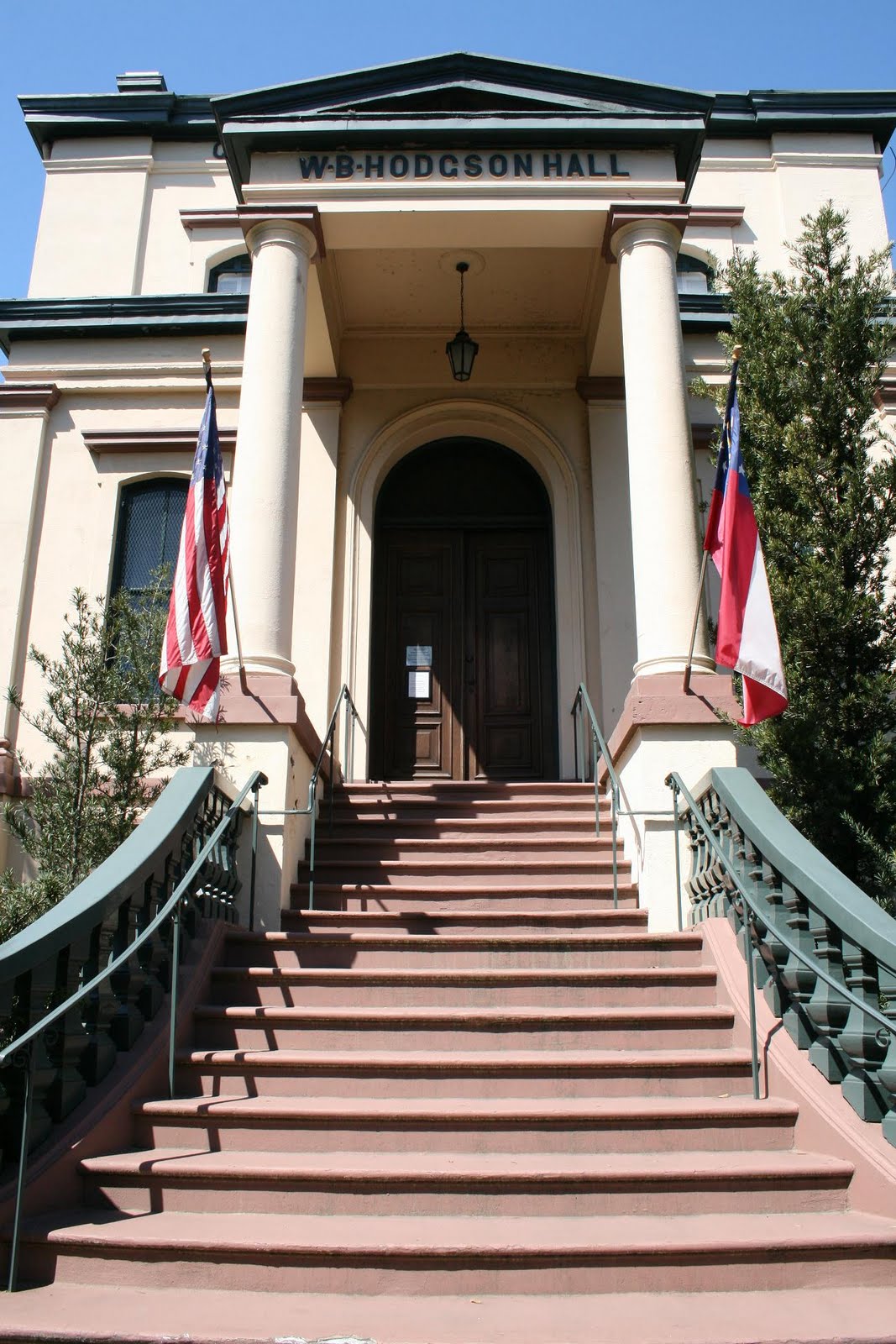
Saturday was a bit of a late start. After breakfast we headed out to explore some of the many squares in town. When we would come to an interesting one we would just sit and people watch. Savannah seems to have a bit of a homeless or unemployment problem and many of these people can be found in the squares. One was giving a concert on his flute playing beginning versions of songs such as Take Me Out to the Ball Game. You just never know what you'll see or hear. We eventually made our way towards our goal which was the Georgia Historical Society. Due to funding cuts they have reduced hours and didn't open until noon. Unfortunately there was not really a lot to see here but there are plenty of research materials should you need them. If nothing else it's worth a walk by just for the impressive building.

Our next stop was V & J Duncan Antique Maps, Prints & Books.  What a treasure this place is! Drawer after drawer of antique prints and maps divided by subject. Case after case of books. Do you collect postcards? Don't miss the drawers full nicely divided by category. This store is a paper collectors dream. I picked up a nice woodcut print of the Confederate Cabinet while there and some postcards for my dad's collection. Make sure to say hello to Sally and Emma the shop dogs while there.

It was now time to wander back towards the river and the hotel. We stopped in several "antique" shops just to see what was there. Antiques such as "confederate" money dated well after the war, a nazi coat that was so obviously wrong somebody had written "fake" on the price tag (it could be yours for $500), and display after dispaly of items that look like they came from grandma's house. Not antiques or even really collectible just kind of old and dusty. I'm sure there were some finds somewhere in those shops but I'm not sure where. We then went back to the hotel for a brief rest before going to dinner. Dinner on Saturday was at Ruth's Chris Steak House. Expensive yes, delicious yes, great way to wrap up an anniversary trip, yes! Currently they are running a three course special for around $40 per person before 6:30. Quite a bargain and the food was excellent. Top notch service as well. When we finished it was still fairly early so we headed back toward City Market to see what was happening. No band that night but we grabbed a table and just sat and watched. Chris went and talked to the owner of a white, deaf, great dane. Beautiful dog and very calm despite all the people around. I noticed many stop to take photos of or with the dog. The owners were very patient with the onlookers. It was kind of weird but we saw close to half a dozen great danes while there. Not a dog you see all that often.

Sunday we awoke to rain and the drive home. It rained the entire way back. Better to have rained on Sunday than on any of the days we were there.  Overall it was a really fun time. The weather was nice and it wasn't too crowded. Savannah is a great town to walk through. There are tons of squares to stop in, loads of historic house museums, historic cemeteries, beautiful churches, and more. Outside of town are Fort Pulaski and Old Fort Jackson, not to mention Tybee Island. Shopping and restaurants are plentiful. Staying in the historic area is not cheap but good prices can be found with some effort. If you don't mind driving in and dealing with the parking problem hotels near I-95 are always an option. Highly recommended.

Tuesday, December 8, 2009

Russell Bonds speaks on Stealing the General


Last Sunday I had the pleasure of meeting Russell Bonds and hearing him speak on his wonderful book Stealing the General. Mr. Bonds was the guest speaker at the Christmas meeting of the W.W. Loring Camp 1316 of the Sons of Confederate Veterans. Mr Bonds uncle, the late Jan Parham, had invited him to speak. Mr. Bonds gave an interesting talk which was enhanced with a PowerPoint presentation. While I have read and highly recommend Stealing the General I was able to learn some new things. The city now known as Atlanta went through several name changes but did you know that Atlanta is actually an old Cherokee word for "to change planes"? (See Russ we really were paying attention).

In all seriousness Russ gave a very interesting talk and if you get a chance to see him I highly recommend making the time. In addition to a great talk Russ was genuinely glad to "press the flesh". When I walked in he recognized me within literally just a couple of minutes and came and introduced himself. He introduced my wife and I around to several people including is aunt and charming wife Jill. He really made a positive impression on me as an author, speaker, and person. My wife, who despite having been a history major is not enthralled by the Civil War, told me the talk was interesting enough she may have to read the book herself. She'll have to get her own copy though because she can't have my signed hardback copy!

I had never been to a SCV event before and was not sure what to expect. I must admit my wife and I were treated with kindness and respect by everybody. I was wearing my FSU windbreaker and stepped outside for a few minutes. A young man who happens to be a University of Florida fan struck up a conversation with me about college football and we had a really nice talk. Many others came up to say hi to the "new couple" and all were pleasant. Even new camp commander James Davis talked to me and made a point to tell me I was always welcome and he'd love to see me again. The United Daughters of the Confederacy even talked to my wife and promised to send her information. Whether we have any interest in joining these groups isn't relevant it's that they tried to make sure we didn't feel like outsiders.

Overall 5/5 stars on the presentation. And to think all it cost me was a trip to the St. Augustine Outlet Mall afterwards! That's a whole different story though.

Friday, November 13, 2009

Book Review--Stealing the General


Bonds, Russell S. Stealing the General: The Great Locomotive Chase and the First Medal of Honor. Westholme Publishing, Yardley, PA. 2006. 444 pages, 374 pages of text, maps, b/w photos, notes, bibliography, index.

It's a story many have heard of but how much do most people really know. Once you read Russell Bonds masterful work Stealing the General you'll know just about all there is to know on "the great locomotive chase". Forget the Disney film read this book!

Bonds skillfully incorporates a large list of primary and secondary sources to paint a complete picture of the plan hatched by civilian James Andrews and Union Brigadier General Ormsby Mitchel. This daring plan called for Andrews and a group of Union soldiers to sneak behind enemy lines and steal a train in Atlanta, they would then head north leaving destruction, including burned bridges, torn up railroad tracks, and cut telegraph wires behind them on their way to Chattanooga where they would meet up with Mitchel's troops to capture the city and effectively cut the Confederacy in half.

Andrews and 24 recruits (Andrews Raiders) made it to Atlanta, not without difficulties, where they proceeded to steal the train engine, The General. What they did not count on was being followed by the Generals conductor William Allen Fuller and several others. Despite the difficulties of following on foot, hand car, and later on a train engine running in reverse, the Confederates did not give up and the raiders were all eventually captured and arrested.

Bonds proceeds to tell the story of trials, jails, evil jailers, prison escapes, recaptures, executions (Andrews was the first to be executed and Bonds paints a grim picture of what happened), prisoner exchanges, the Medal of Honor, life after the war for the remaining raiders (some good and some bad), GAR reunions, friendships made amongst former enemies, and later infighting amongst the survivors as to what actually happened and the role each played.

Bonds has proven himself a writer of remarkable skill. As mentioned he has covered all the sources. His bibliography itself is 12 pages and his notes run 45 pages. Bonds incorporates maps and black and white photos to help readers visualize the action and put faces to names and places. Even more impressive than all this is the readability of his work. The writing itself is a joy to read. Bonds keeps the story moving at a fast clip all the while seeming to cover all the bases. For anybody researching this story Bonds has written what can no doubt be considered at this time the definitive work.

For further information please be sure to visit Mr. Bonds website for this book. It's full of interesting information and is well worth a look.

Saturday, June 27, 2009

Book Review--Civil War Walking Tour of Savannah


D'Arcy, David and Ben Mammina. Civil War Walking Tour of Savannah. Schiffer Publishing Ltd, Atglen, PA. 2006. 159 pages, end notes, bibliography, color photos, b/w photos.

As a major part of Sherman's "March to the Sea" Savannah, GA holds a special place for those studying the end of the war. D'Arcy and Mammina have put together a book that anybody visiting Savannah who has an interest in the Civil War should consider purchasing. Despite the title the book actually contains two walking and two driving tours. Unfortunately I did not find this book until the last day of our trip so I don't have estimates on how long these tours take.

The first walking tour is titled Savannah Early in the War and includes 18 stops ranging from the Customs House and Union General John Geary's Headquarters (now a Tony Roma's Restaurant) both on Bay Street to various churches, homes, and squares. This tour is quite a long one and is probably not recommended for the hot summer months. Trust me, I just got back and it is scorching hot in June.

The second walking tour is a bit shorter at 14 stops and is titled Savannah Late in the War and After. Stops include churchs, homes, and the Colonial Cemetery where many of Sherman's trooops stayed during the occupation. Be sure to see the wall of headstones that came about due to damage caused by the troops.

The first driving tour is called Savannah's Eastern Defenses and includes 10 stops. This looks like it would be a long tour especially having to hit both Old Fort Jackson and Fort Pulaski on the same day. Also included are Bonaventure Cemetery ( Civil War Generals Paul Harrison, Robert Anderson, and Alexander Lawton are buried here)and Laurel Grove Cemetery (Civil War Generals Gilbert Moxley Sorrel, Lafayette Mclaws, Francis Bartow, Henry Rootes Jackson, Jeremy Gilmer, and over 600 other confederate dead are buried here) amongst other locations. Plan a couple days for this tour!

The second tour is titled Siege of Savannah December 1864 and includes just 7 stops but appears to have more driving time. Stops include Fort McAllister State Historic Site and the tour concludes at the Savannah Visitor Center and History Museum.

This is a very nice book to look at with excellent photos and no doubt a great set of tours to take. I do have a few issues with it however. The first has nothing to do with the book but my suggestion would not be to buy the book and try to head off on the tours. I highly suggest taking a bus/tram tour of the city first in order to get oriented. There are many choices ranging from about $10 and up depending on what you want. I think that will make things much easier as you get going. I would like to have had an essay of some kind discussing the role Savannah played in the war and what happened when Sherman arrived. As it is the stops are just that-stops. They don't seem to have much in the way of historical context. There is a brief description of each stop but I think a way to tie the whole city together would be a great addition to future editions. A better map would also be of value. There is one map included at the front of the book that outlines the two walking tours. One tour is in red and is somewhat easy to follow; the second however is done in purple can hardly be seen. Putting a map in for each walking tour and making them a bit more legible would be a great addition and not expensive to add to the book. Maps for the driving tour would not be easy to include and would prove most difficult to read on the scale that would be required to put in a book. These issues aside I still feel this is a great item for anybody with an interest in the Civil War who is visiting Savannah. Without it there are many places you'll not see or hear about. Well worth checking out.

Just as a note...I am including the Amazon link but please be aware that cover price on the book is only $19.95 so as of this writing the prices listed there are very high. It may pay to shop around.